Seedance 2 Mini in Preview: What the Family's Fast Tier Looks Like
Seedance 2 Mini has not launched yet on fal. Here is what the family's prior fast tiers looked like, what we expect, and what you can ship on Seedance 2.0 in the meantime at $0.3034/s.
Seedance 2 Mini is in the pre-launch window. No public pricing, no confirmed resolution cap, no Arena Elo posted yet. Treat every Mini-specific number you see online today as a guess, including ours where we extrapolate from history. This post walks through what we actually know about the family, what Mini has historically meant in the Seedance line, and how to ship today while you wait.
The lineage
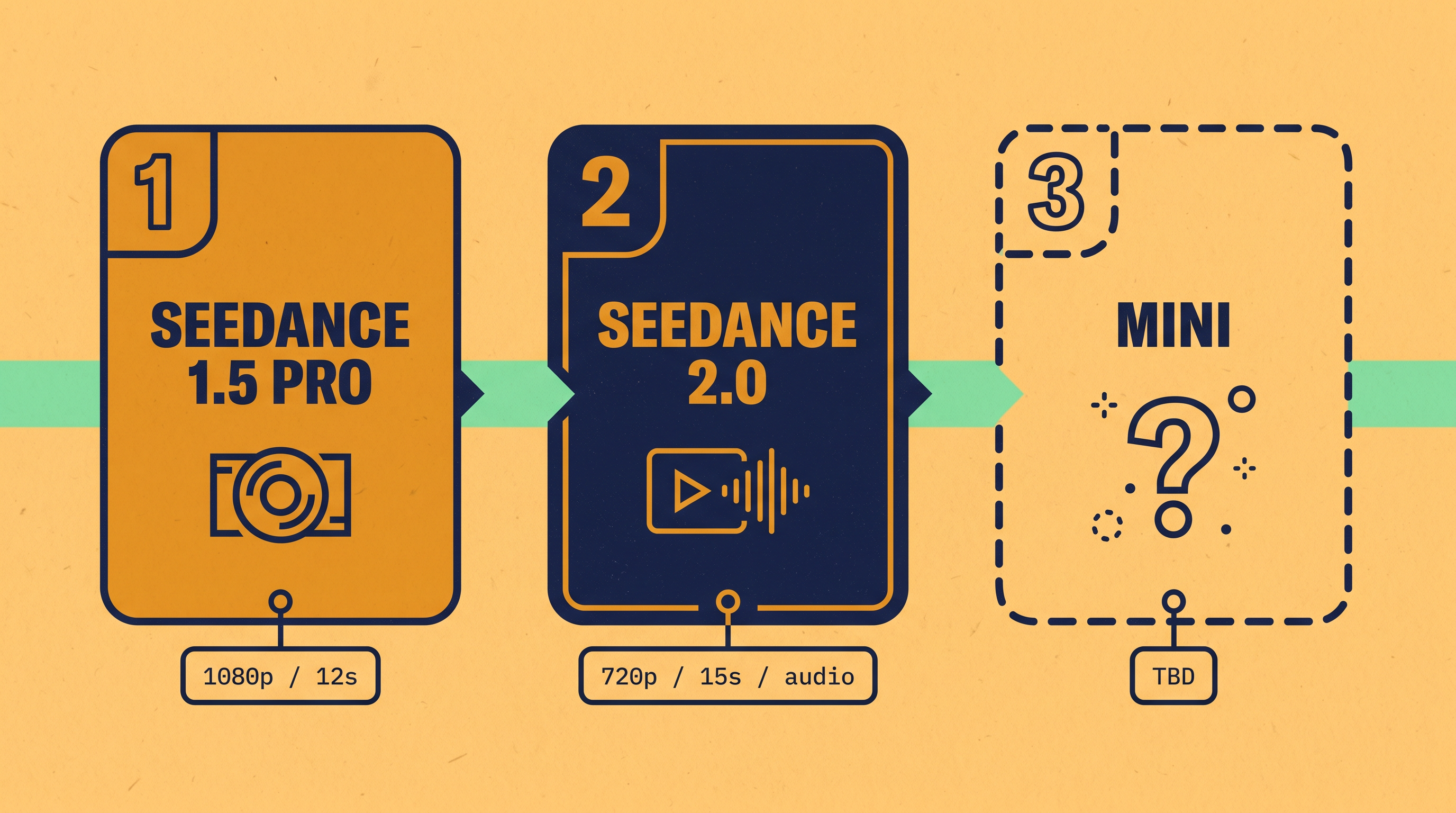
Seedance 1.5 Pro shipped first, capped at 1080p and 12 seconds, and held a 1173 Elo on the text-to-video board at the start of 2026. Seedance 2.0 followed on April 15, jumping to a 1270 Elo at 720p and 15 seconds with a new reference-to-video endpoint that accepts 9 image, 3 video, and 3 audio inputs in one call. Native audio came along on the same pass. Seedance 2 Mini is the next entry, announced but not deployed at the time of writing.
The family pattern is steady. Each release ships a quality and feature bump, then a fast or mini variant follows three to six weeks later that trades some fidelity for a cheaper bill and a shorter queue.
What Mini has meant before
In comparable model lines, the Mini or Fast variant tends to follow three rules.
First, the same prompt surface as the parent. Same aspect ratios, same duration range, same audio defaults. You do not relearn the interface.
Second, a cheaper per second rate that comes from a smaller compute budget. The pixel count and frame rate stay constant; the model behind the call is smaller.
 Third, a tighter quality envelope on fine texture and long narrative coherence. Fabric weave softens. Multi shot continuity drifts on the second half of a 12 to 15 second clip. The lower price buys you iteration speed, not hero quality.
We expect Mini to follow this pattern. We do not promise it.
The fallback you can ship today
While Mini is offline, your playground call falls through to bytedance/seedance-2.0/text-to-video. That endpoint is the closest shipping relative and it is real: $0.3034 per second at 720p plus $0.014 per 1000 tokens, where tokens equal height times width times duration times 24 divided by 1024. Aspect ratios run from 21:9 down to 9:16. Duration goes from 4 to 15 seconds. Native audio is default on.
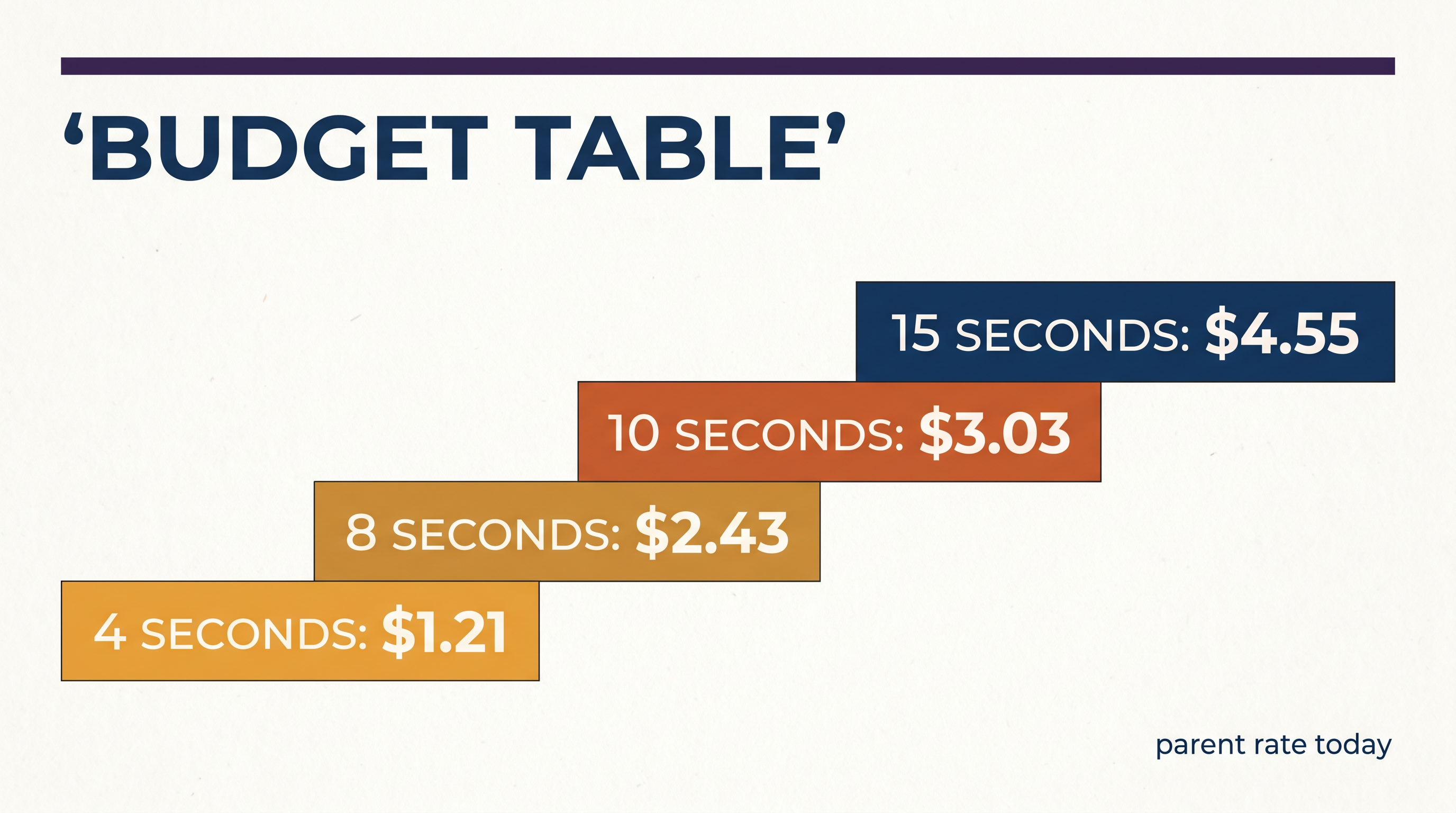 A five second 720p clip lands at $1.51 to $1.52 by either the per second math or the token formula. That is the number to use for budgeting until Mini gets a posted rate.
01import { fal } from "@fal-ai/client";0203// Seedance 2.0 stand-in while Mini is in preview04const result = await fal.subscribe("bytedance/seedance-2.0/text-to-video", {05 input: {06 prompt: "A cyclist coasts through a quiet rainy street at dawn, neon reflections on wet asphalt, slow dolly right.",07 resolution: "720p",08 duration: 5,09 aspect_ratio: "16:9",10 generate_audio: true11 },12 logs: true13});1415console.log(result.data.video.url);
What we will track once Mini ships
Four numbers will tell you whether Mini is the right default for your pipeline.
The per second rate, and whether it preserves the same token formula. If the formula stays identical, your existing cost spreadsheets keep working.
The Arena Elo on text-to-video and image-to-video. A Mini that lands within roughly 60 to 90 Elo points of 2.0 is usable for production. A larger gap pushes Mini back to draft work only.
 The maximum resolution. If Mini holds at 720p like 2.0, social workflows do not change. If it caps lower, plan upscale passes.
The native audio behavior. Default on, default off, or no audio support at all. Each one changes your post-production lane.
Picking a workflow now
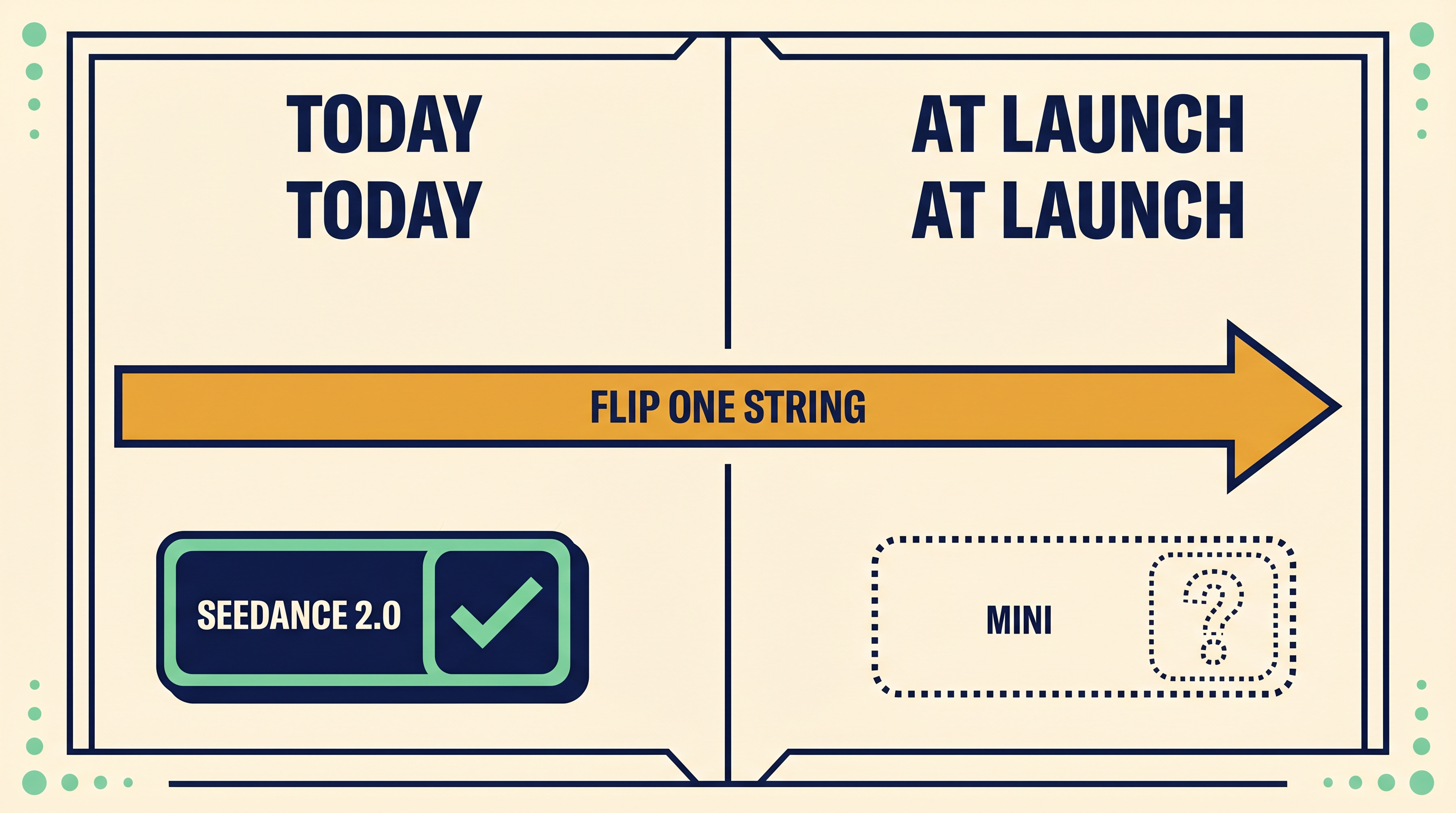
If you are building a production pipeline today, point it at Seedance 2.0 and budget against the published rate. Add a feature flag for the Mini endpoint and a configuration switch for the per second rate. When Mini lands, you flip the flag, update one number, and the rest of your queue keeps working.
If you are iterating on prompts, run on 2.0 and lock the prompt that survives review. The phrasing that works on 2.0 will likely transfer to Mini with minor adjustments. The next post in this series covers exactly which patterns transfer cleanly.
We will refresh this post within 24 hours of Mini going live. Until then, every Mini number is preview and subject to change.