What Mini Tier Pricing Could Look Like, And How We Compute It Today
Seedance 2.0 bills at $0.3034 per second of 720p output plus $0.014 per 1000 tokens. Mini's rate is not posted yet. Here is the token formula, today's real cost on 2.0, and historical Mini-tier ratios from comparable families.
Seedance 2 Mini does not have a posted rate yet. Anyone quoting one is guessing. This post walks through the real Seedance 2.0 math you can put in a spreadsheet today, then maps what comparable Mini variants have historically charged as a fraction of their parent. We will update this page within 24 hours of the actual Mini rate posting on fal.
The real Seedance 2.0 numbers
Text to video on bytedance/seedance-2.0/text-to-video bills two ways that arrive at the same answer.
By duration: $0.3034 per second of 720p output.
By tokens: $0.014 per 1000 tokens, where the token count is computed as tokens = (height x width x duration_seconds x 24) / 1024.
At 720p (1280 x 720), 5 seconds, 24 fps that comes out to (720 x 1280 x 5 x 24) / 1024 = 108,000 tokens. 108,000 tokens at $0.014 per 1000 lands at $1.512. The per second math ($0.3034 x 5 = $1.517) tracks within rounding. Use the per second number for back of envelope budgeting; use the token formula when you compare across resolutions and durations.
A budget table on 2.0
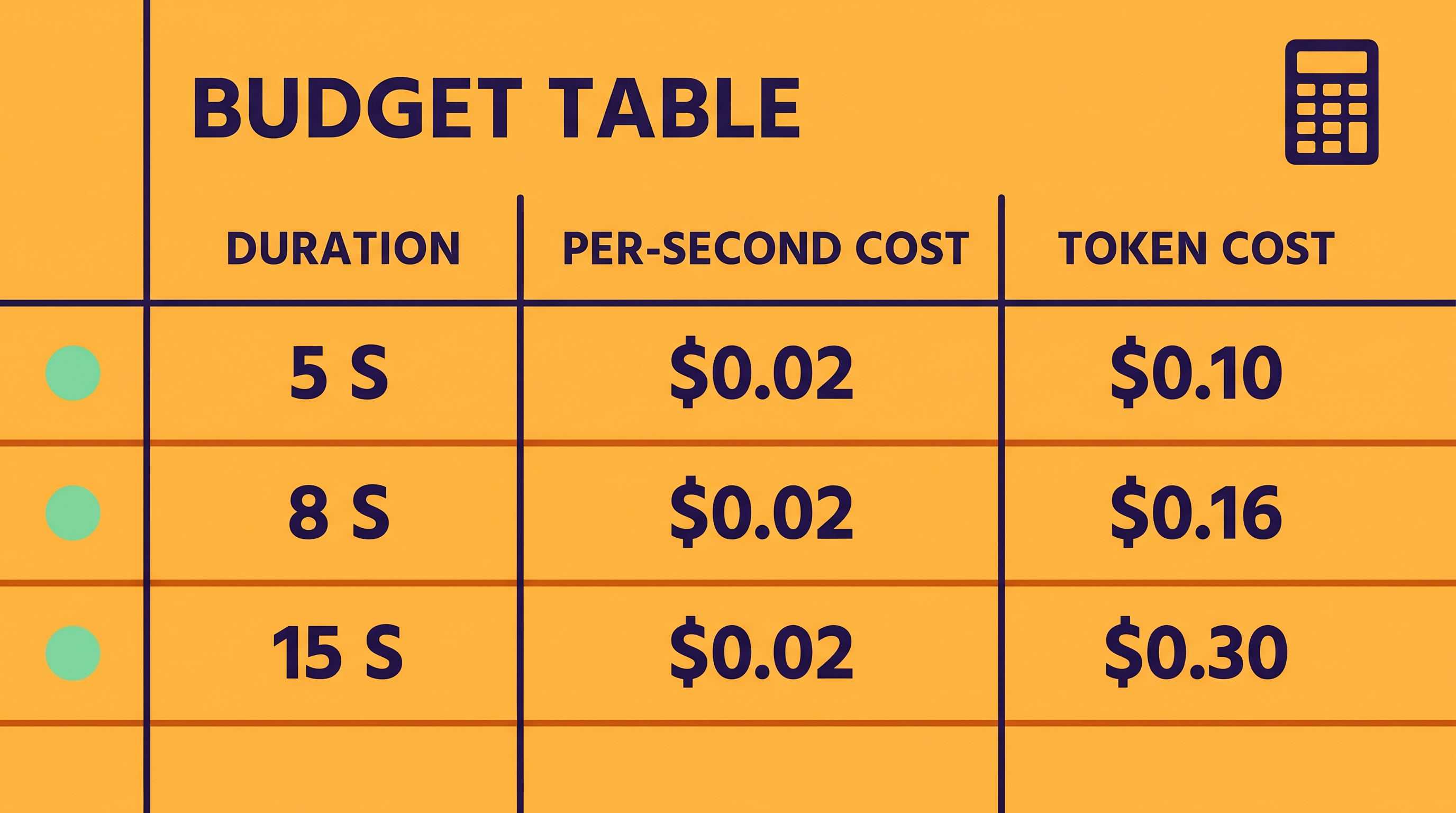
100 clips at 5 seconds, 720p: $151.70 by per second math, $151.20 by token math.
Bump to 8 seconds: $242.72 by per second, $241.92 by token.
 Go to 15 seconds, the max: $455.10 by per second, $453.60 by token.
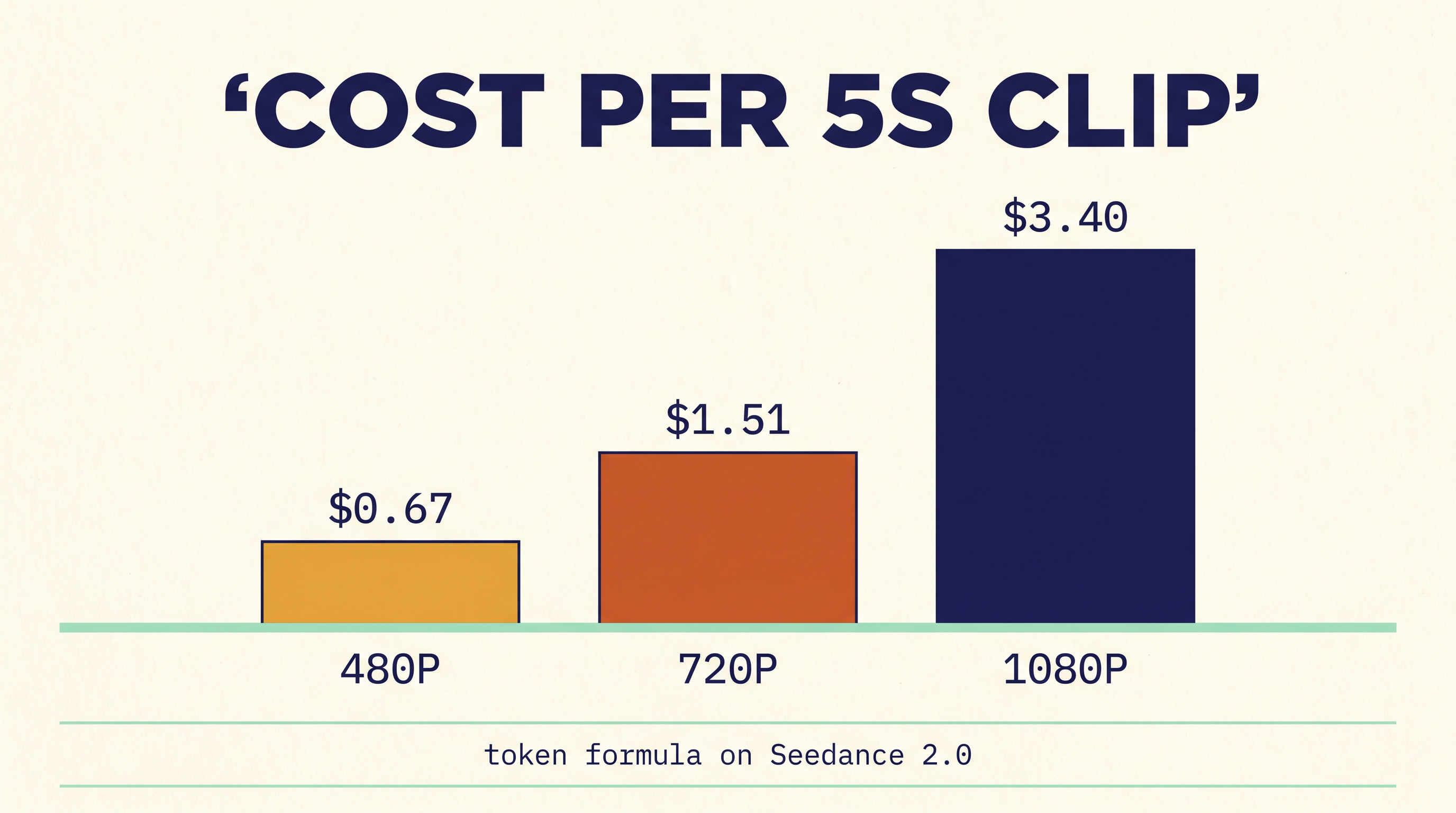
Four resolutions become interesting once you wire the formula. At 480p (854 x 480), a 5 second clip is 48,022 tokens at $0.014 per 1000, or $0.67. At 1080p (1920 x 1080), the same 5 seconds is 243,000 tokens, or $3.40. Per second math does not capture this; the token formula does.
Reference to video, briefly
The reference endpoint bytedance/seedance-2.0/reference-to-video runs at $0.3024 per second with image inputs and $0.1814 per second when video inputs are part of the reference stack. Accepts up to 9 image, 3 video, and 3 audio references per call. Different shape, same family.
What Mini variants have historically charged
 Mini and Fast variants across comparable model families have landed in a band. The ratio depends on what got trimmed: the model size, the sampler step count, or the audio module.
In one neighboring video family, the Fast tier landed at about 80 percent of the parent rate. In another, the Mini variant came in at roughly 65 percent. A third family priced its mini at half the parent rate but stripped audio generation entirely.
Which pattern Seedance picks will depend on what Mini ships with. If audio stays on and resolution holds at 720p, expect a smaller discount because the expensive part of the model is intact. If Mini drops audio or caps lower, the discount can be larger.
We are not putting a number here. Every Mini-specific figure is preview and subject to change.
A planning template you can update on launch day
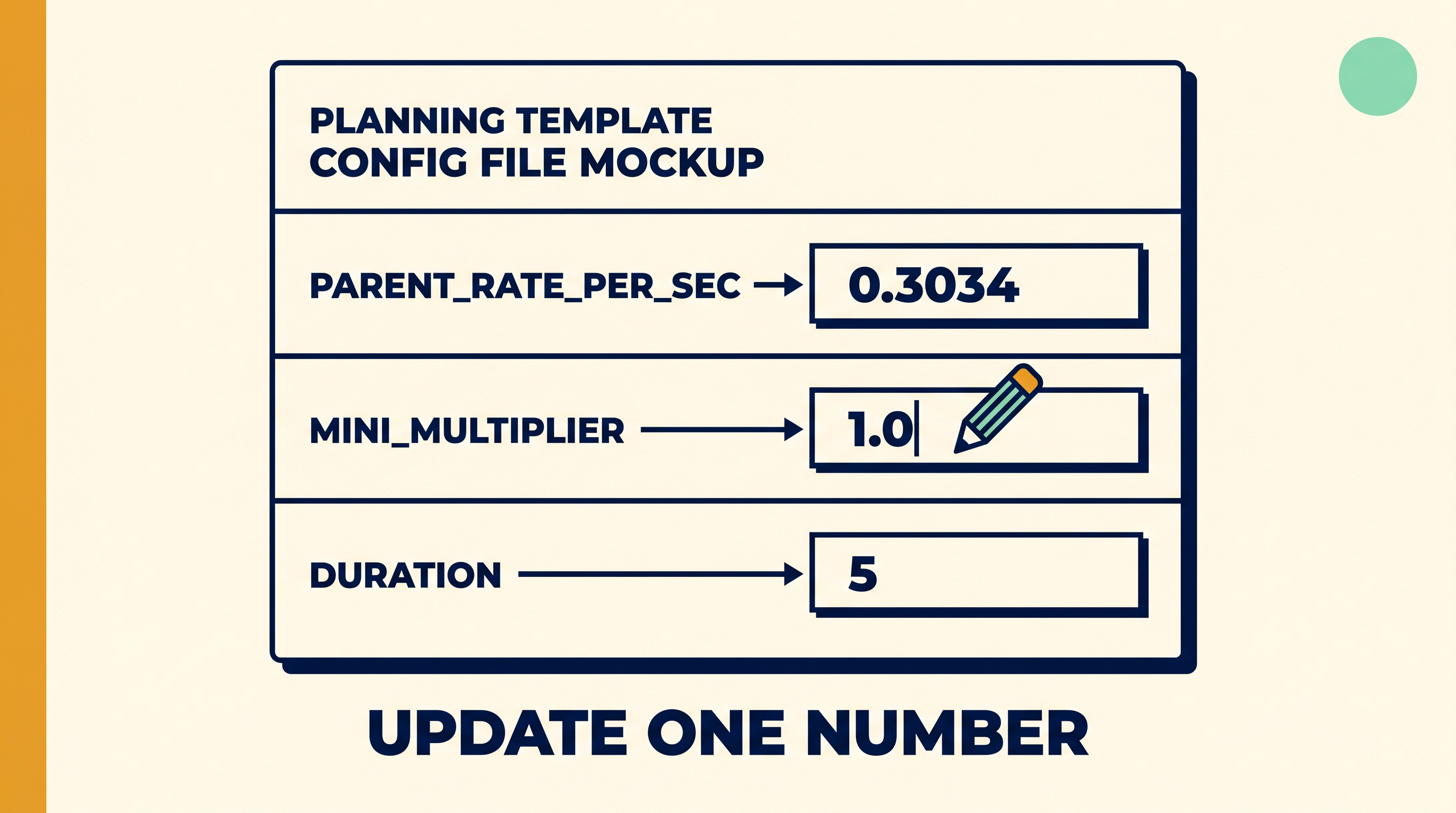 Write your budget as a function of the parent rate. Store the parent rate ($0.3034/s) and a Mini multiplier in a config file. When Mini lands and the rate is posted, update the multiplier and your spreadsheet recomputes.
01import { fal } from "@fal-ai/client";0203// Today: Seedance 2.0 stand-in while Mini is in preview04const PARENT_RATE_PER_SEC = 0.3034;05const MINI_MULTIPLIER = 1.0; // update on Mini launch0607const duration = 5;08const estimatedCost = duration * PARENT_RATE_PER_SEC * MINI_MULTIPLIER;0910const result = await fal.subscribe("bytedance/seedance-2.0/text-to-video", {11 input: {12 prompt: "Aerial shot pushing forward over a coastal highway at sunset, golden hour side light.",13 resolution: "720p",14 duration,15 aspect_ratio: "16:9"16 }17});1819console.log(`estimated $${estimatedCost.toFixed(2)} for ${duration}s, actual url: ${result.data.video.url}`);
The pattern keeps your code stable across the Mini rollout. Swap the endpoint string and the multiplier; nothing else changes.
The math you should worry about, regardless of Mini's rate
Three factors compound faster than any per second rate change.
Iteration count per final clip. If you ship 3 versions per delivered shot, your real cost is 3x the per clip number, not 1x. Cutting iteration count from 5 to 3 saves more than any tier discount.
Duration creep. Going from 5 to 8 seconds per draft adds 60 percent to the bill. Lock duration early.
Resolution selection. 1080p costs 2.25x what 720p costs by the token formula. Pick the lowest delivery resolution your platform accepts.
Once Mini posts its rate, we will refresh this post with the actual multiplier and a side by side comparison table against 2.0 for the same prompt set.